
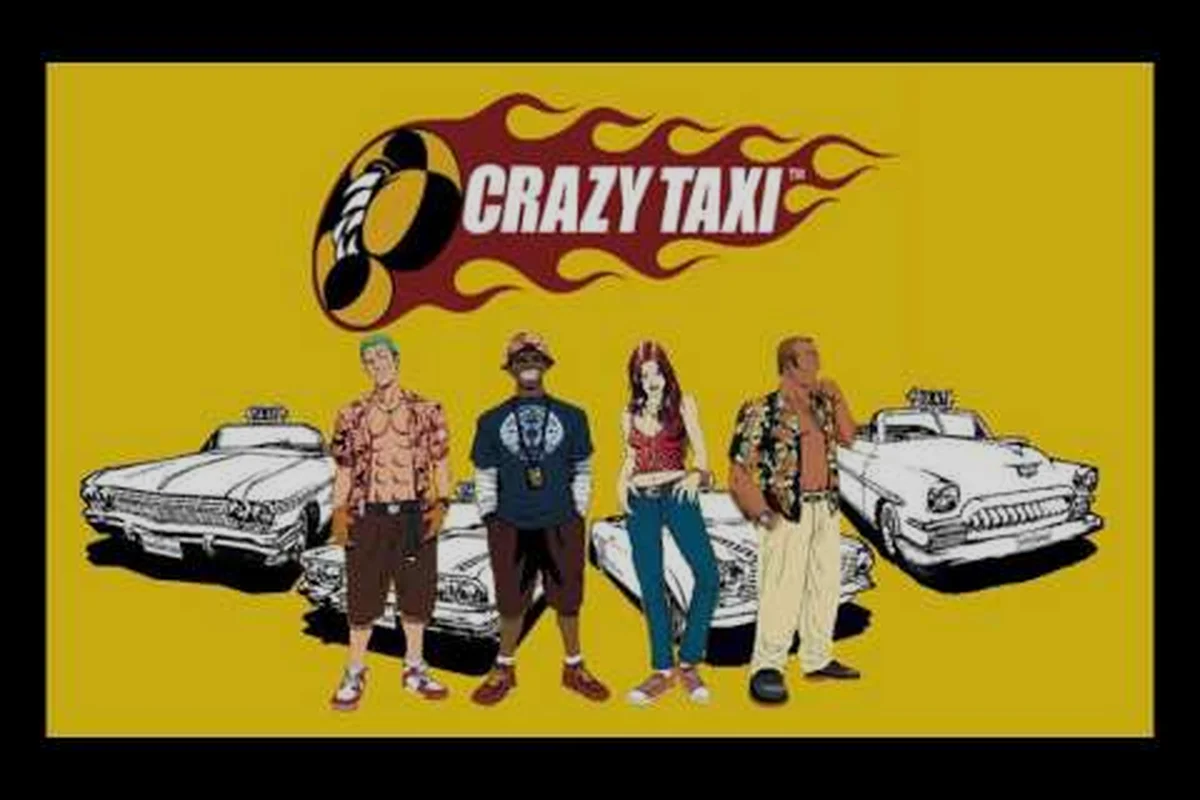
Why Crazy Taxi Unreal Engine 5 Is the Biggest Tech Leap in the Series
When SEGA confirmed the next mainline Crazy Taxi is running on Crazy Taxi Unreal Engine 5, the announcement landed differently than any prior entry. Previous installments shipped on bespoke arcade hardware, then on Dreamcast, GameCube, PS2, and Xbox hardware with mid-tier in-house engines. World Tour is the first Crazy Taxi built on a modern, third-party production stack, and the choice ripples through every design pillar: open-world city scale, traffic density, lighting, netcode, and the Crazy Taxi massively multiplayer plans for 2027. The shift is more than a marketing line — it explains why the reboot can host five cities, up to six-player online races, and a story campaign that finally feels as wide as the original arcade dream suggested.
The Crazy Taxi open world reboot needs that tech because the classic 1999 loop was a tightly authored arcade corridor. Drivers had one map, one traffic grid, and one timer. In 2027, fans expect something closer to a modern action-racer: branching districts, real day-night cycles, dense pedestrian and car AI, and a sandbox where stunt chains feel earned instead of scripted. Unreal Engine 5 is the toolset that makes that scope survivable on PC, PS5, Xbox Series X|S, and Nintendo Switch 2. For anyone tracking the Crazy Taxi series order and wondering where the franchise pivots, this engine choice is the hinge.
The Tech Stack Behind Crazy Taxi Unreal Engine 5
The Crazy Taxi Unreal Engine 5 build layers Epic's modern rendering and tooling onto Hitmaker's original design DNA. The team is using Nanite-style geometry for the city surfaces, Lumen-style global illumination for the neon-soaked sunset that defined the Dreamcast original, and the engine's mass-entity traffic system to populate each block with cars, buses, and pedestrians. The result, based on the September 11–13 closed network test footage, is the densest street scene the series has ever shipped.
| Engine Feature | Crazy Taxi Use Case | Player-Facing Benefit |
|---|---|---|
| Nanite/Lumen-style rendering | Building facades, neon signage, asphalt tarmac | Crisp reflections during drifts, fewer pop-in landmarks |
| Mass entity traffic AI | West Coast and Germany city grids | Near-miss chains stay reactive instead of scripted |
| World Partition | Five-city map split into streaming cells | Fast travel between districts without loading screens |
| Cross-platform netcode | PC, PS5, Xbox Series X|S, Switch 2 | Stable 60 fps target for online Pickup Race |
| Lumen-style global illumination | Sunset golden hour on the West Coast map | The classic orange sky finally reads on modern HDR displays |
This combination is also why the Crazy Taxi massively multiplayer vision is plausible. The original arcade cabinet was a single-screen, single-driver experience. A modern, six-player ranked mode needs server-side traffic simulation, deterministic physics, and entity replication that only a current-gen engine can offer. According to the official Crazy Taxi: World Tour website, the closed network test specifically stress-tests that replication across console families.
Rendering Choices That Define the Reboot
One of the most striking visual upgrades in the Crazy Taxi Unreal Engine 5 rebuild is the lighting pass. The 1999 Dreamcast original leaned on baked vertex colors and a single warm sunset gradient. The 2027 version uses real-time global illumination to throw colored bounce light off shop windows, traffic lights, and neon signs during a near-miss combo. The aesthetic lands closer to a music video than a traditional arcade racer, which is appropriate — the soundtrack is once again built around licensed punk and ska tracks.
| Visual Pillar | Original (1999) | Crazy Taxi: World Tour (2027) |
|---|---|---|
| Lighting model | Baked vertex color | Lumen-style real-time GI |
| Geometry density | ~5k polygons per building | Nanite-assisted high-poly facades |
| Traffic AI | Path-based scripts | Mass-entity mass simulation |
| Frame rate target | 60 fps (DC) / 30 fps (PS2) | 60 fps on PS5, Xbox Series X|S, PC; 30–60 fps on Switch 2 |
| Online players | 1 (couch co-op in some ports) | Up to 6 cross-platform |
The point isn't that the 2027 game is prettier — though it is — it's that the rendering budget is now large enough to support a believable open world without giving up the 60 fps arcade tempo. That balance was the holy grail for every prior entry and is finally within reach.
Netcode, Cross-Play, and Massively Multiplayer Plumbing
The Crazy Taxi massively multiplayer plans are the second reason the engine choice matters. SEGA and the development team have committed to cross-platform play between PC (Steam), PlayStation 5, Xbox Series X|S, and Nintendo Switch 2. The closed network test scheduled for September 11–13, 2026 is the first public stress test of that stack. According to the Crazy Taxi: World Tour Steam page, the test will run Pickup Race and Cops 'N' Cabbies, two confirmed online modes, on a subset of the full six-cab roster and four-driver cast.
| Multiplayer Pillar | Implementation Detail | Why It Matters |
|---|---|---|
| Cross-play | All four launch platforms in one lobby | Friends on console and PC can queue together |
| Party size | Up to 6 players per match | Largest competitive field in series history |
| Modes at launch | Pickup Race, Cops 'N' Cabbies | Distinct skill tests — racing vs. pursuit |
| Server model | Authoritative server with client prediction | Cheating resistance and rubber-band fairness |
| Beta window | Sept 11–13, 2026 (closed) | First hands-on with the netcode before launch |
The series has never had this level of multiplayer investment. The original 1999 arcade ran a linked-cabinet mode, but consumer ports dropped it. Crazy Taxi 2 and 3 added split-screen, but online was limited by 2001–2004 console network constraints. The 2027 reboot finally gets to honor the Crazy Taxi massively multiplayer promise that arcade operators were already pitching in 1999.
Crazy Taxi Series Order: Where World Tour Fits in the Franchise
For readers new to the franchise, the Crazy Taxi series order is shorter than you might expect. Hitmaker and SEGA shipped a tight core trilogy between 1999 and 2003, then experimented with handhelds, a PSP entry, and a mobile free-to-play spinoff before going dormant for over a decade. World Tour is the first brand-new mainline game since 2003, which makes it the most anticipated entry in more than twenty years.
| # | Title | Year | Platform | Engine | Notes |
|---|---|---|---|---|---|
| 1 | Crazy Taxi | 1999 | Arcade, Dreamcast (2000) | Sega Hikaru / custom | The original West Coast arcade corridor |
| 2 | Crazy Taxi 2 | 2001 | Dreamcast, PS2 (2003) | Custom (DC) / RenderWare (PS2) | New York-style map, Crazy Hop added |
| 3 | Crazy Taxi 3: High Roller | 2003 | Xbox, PC | RenderWare | Las Vegas / Glitter Oasis / West Coast |
| 4 | Crazy Taxi: Catch a Ride | 2003 | GBA | GBA native | Top-down handheld adaptation |
| 5 | Crazy Taxi: Fare Wars | 2007 | PSP | PSP native | Remixed missions from the original two |
| 6 | Crazy Taxi: City Rush | 2014 | iOS, Android | Unity (mobile) | Free-to-play, soft-launched then shut down |
| 7 | Crazy Taxi: World Tour | 2027 | PC, PS5, Xbox Series X|S, Switch 2 | Crazy Taxi Unreal Engine 5 | First mainline entry since 2003 |
That lineup is the canonical Crazy Taxi all games list for most fans. The 2014 City Rush is the one most players skip or forget, and the GBA and PSP entries are beloved by collectors but never pushed the franchise forward technologically. The reboot effectively resets the canon: new characters, new cities, new cabs, and a new engine, but the same pick-up-and-go arcade soul. For a deeper look at the franchise's lineage and where the reboot lands, the series history guide maps out the full timeline in more detail.
Why the Franchise Went Dormant
Understanding the Crazy Taxi game history between 2003 and 2027 is part of why this launch matters. After High Roller, SEGA shifted Hitmaker's attention to other arcade properties, the PSP port was a contract-driven remix, and City Rush tried — and ultimately failed — to translate the arcade DNA into a free-to-play mobile format. For more than a decade, fans kept the series alive through emulation, fan mods, and a steady stream of "when is Crazy Taxi coming back?" threads on ResetEra and Reddit.
The 2027 reboot is the first time a major studio has committed a full production budget, a modern console launch, and a live-service-style multiplayer roadmap to the IP. The Crazy Taxi Wikipedia entry notes that each prior entry leaned on the same pick-up/deliver/stunt loop, and World Tour keeps that core while finally adding the production values modern players expect. That's why "Crazy Taxi game history" is the most useful search query for understanding what changes in 2027 — the design loop is the constant, the tech stack is the variable.
The Open World Rebuild and Unreal Engine
The Crazy Taxi open world rebuild is the most visible player-facing change. The original 1999 map was a single arcade circuit with no loading between neighborhoods, but it was also small enough to memorize in an afternoon. The 2027 reboot is split across five cities — the West Coast starter map, Germany, and three additional locations yet to be fully detailed — each with multiple districts, landmarks, and side-street shortcuts. The world is no longer a delivery corridor; it is a delivery playground.
| City (Confirmed/Inferred) | Vibe | Signature Landmarks | Why It Matters |
|---|---|---|---|
| West Coast (confirmed) | Classic 1999 throwback | Beachfront pier, downtown grid, suburban loops | Tutorial city, nostalgia anchor |
| Germany (confirmed) | European autobahn | Alpine passes, industrial zones, autobahn stretches | High-speed drift testing ground |
| City 3 (TBA) | Likely Asian metro | Crowded intersections, vertical layers | Tests traffic AI density |
| City 4 (TBA) | Likely South American | Coastal cliffs, narrow alleys | Tests stunt chain routes |
| City 5 (TBA) | Likely Australian/Oceania | Outback-to-city transitions | Tests long-distance fare pacing |
The five-city design also reframes the story campaign. Axel's quest to recover his stolen cab and chase the masked organization now has a literal world tour structure, with each city acting as a chapter rather than a single map swap. That's a structural upgrade the original arcade couldn't attempt, and it leans directly on the streaming and World Partition features in Crazy Taxi Unreal Engine 5.
Traffic AI and Near-Miss Gameplay
The other player-facing change is traffic density. The 1999 Dreamcast original was already praised for its busy streets, but the AI was essentially a path-following system with simple lane logic. In 2027, the Crazy Taxi Unreal Engine 5 build uses Epic's mass-entity framework to run hundreds of cars and pedestrians per block, each with reactive behavior. The payoff shows up in the near-miss system: closer passes, more lane changes, and more believable reactions when you drift through an intersection at 120 mph.
| Traffic Pillar | 1999 Original | 2027 Reboot |
|---|---|---|
| Max simultaneous vehicles | ~30 | Hundreds per block |
| Pedestrian count | Sparse, static | Reactive crowds at intersections |
| Lane-change logic | Path script | Mass-entity simulation |
| Near-miss reward window | Fixed | Dynamic based on proximity and closing speed |
| Reaction to stunts | None | Cars brake, swerve, honk |
This is the kind of upgrade that doesn't show up in a screenshot, but completely changes the feel of the game. The classic loop — pick up, drift, near-miss, deliver, repeat — finally has the responsive street life it always wanted.
How the Crazy Taxi Massively Multiplayer Vision Comes Together
The Crazy Taxi massively multiplayer plans are the most ambitious part of the reboot. SEGA has confirmed two launch modes — Pickup Race (a competitive race to fares) and Cops 'N' Cabbies (asymmetric pursuit) — and the closed network test in September 2026 is the first time the public will get hands-on with the netcode. For players who want to plan their launch-day routine, the multiplayer guide breaks down party setup, cross-play configuration, and ranked progression.
| Online Mode | Players | Core Loop | Skill Test |
|---|---|---|---|
| Pickup Race | 2–6 | Race to the next fare | Routing and drift chaining |
| Cops 'N' Cabbies | 2–6 (asymmetric) | Cops chase taxi, taxi evades | Evasion and map knowledge |
| Custom Match | 2–6 | Player-defined rules | Mix of both |
| Ranked | 6 (full lobby) | Rotating Pickup Race and Cops 'N' Cabbies | Pure competitive ladder |
The September 11–13 test specifically stress-tests Pickup Race and Cops 'N' Cabbies on the West Coast and Germany maps with the full six-cab roster and four-driver cast. Sign-up closed on August 31, 2026, but accepted players will be the first to feel whether the Crazy Taxi massively multiplayer netcode holds up under cross-platform pressure. Players who missed the cutoff should bookmark the network test dates guide for future test windows and the final 2027 launch.
Cross-Play and Switch 2 Considerations
The cross-platform plan is the most complicated piece of the Crazy Taxi massively multiplayer puzzle. PC players, PS5 players, Xbox Series X|S players, and Nintendo Switch 2 players all queue into the same lobby. That means the team has to balance performance parity — a Switch 2 player on handheld has roughly half the GPU budget of a PS5 player, but the physics and netcode have to feel identical. The Crazy Taxi Unreal Engine 5 build's scalability features are designed for exactly this kind of cross-generation balancing, and the closed test will reveal whether the optimization holds.
| Platform | Target Resolution | Target Frame Rate | Cross-Play Status |
|---|---|---|---|
| PC (Steam) | 4K | 60+ fps | Yes (all platforms) |
| PS5 | 4K | 60 fps | Yes |
| Xbox Series X|S | 4K / 1440p | 60 fps | Yes |
| Switch 2 (docked) | 1080p | 60 fps target | Yes |
| Switch 2 (handheld) | 720p–1080p | 30–60 fps dynamic | Yes |
Players planning to main Switch 2 should also keep an eye on the Switch 2 multiplayer guide for party system, voice chat, and leaderboard details once SEGA confirms them. The cross-platform promise is one of the Crazy Taxi massively multiplayer differentiators, and the team has been unusually public about the testing plan.
What Crazy Taxi All Games Fans Should Watch Between Now and 2027
The Crazy Taxi all games community has been waiting since 2003 for a true sequel, and the run-up to 2027 is the first time in franchise history that SEGA has run a structured pre-launch cadence. Between the closed network test in September 2026, the public marketing push through 2026 and early 2027, and the eventual launch, players have a clear roadmap of testable features. The Crazy Taxi Unreal Engine 5 tech will be the through-line, and every trailer and beta session will reveal more about how that engine is being tuned for arcade action.
| Timeline Window | Milestone | What Players Learn |
|---|---|---|
| Aug 2026 | Beta signup closes (Aug 31) | Final test roster confirmed |
| Sept 11–13, 2026 | Closed Network Test | Netcode, traffic AI, two maps |
| Q4 2026 | Marketing / dev diary cycle | Tuning philosophy, story beats |
| Q1–Q2 2027 | Final pre-launch build | Six-cab roster, full city list |
| 2027 launch | Full release | Five cities, story, online, customization |
The pre-launch checklist matters more than usual because this is the first modern Crazy Taxi. The 1999 original arrived as a finished arcade game, and the Dreamcast port was essentially the same build. The 2027 reboot is a year-long live conversation between SEGA, the development team, and the player base, and the Crazy Taxi Unreal Engine 5 tech is what makes that conversation possible — patches, balance updates, and netcode tuning all rely on a modern, modifiable engine.
Final Take: Why the Engine Choice Defines the 2027 Era
If you're new to the franchise and wondering why anyone cares about a renderer swap, the short answer is that the Crazy Taxi Unreal Engine 5 build is the first time a Crazy Taxi game has had the production budget and toolset to match the original arcade's ambitions. The 1999 game was designed as a single-screen arcade experience that happened to get a console port. The 2027 reboot is designed from day one as a five-city, six-player, cross-platform, live-service-capable arcade racer. That distinction is why "Crazy Taxi unreal engine" is the right search query for understanding the reboot, and why this entry belongs at the top of the Crazy Taxi series order going forward.
The next twenty years of the franchise will be shaped by what ships in 2027, and the engine choice is the foundation. Watch the September 2026 closed network test for the first public signal of whether the Crazy Taxi massively multiplayer and Crazy Taxi open world ambitions hold up under real cross-platform play. What's the one feature you're most hoping the network test reveals? Drop your prediction in the comments, and we'll keep this guide updated as SEGA confirms more of the 2027 launch details.
Frequently Asked Questions
What is Crazy Taxi Unreal Engine 5 and why does it matter?
Crazy Taxi Unreal Engine 5 is the modern engine build powering the 2027 reboot, replacing the bespoke mid-2000s tech used in prior entries. It enables the five-city open world, dense traffic AI, real-time lighting, and the cross-platform multiplayer plans — none of which the Dreamcast or PS2-era engines could support at this scale.
How many Crazy Taxi all games entries are there before the 2027 reboot?
There are six main entries before World Tour: the 1999 arcade original, Crazy Taxi 2 (2001), Crazy Taxi 3: High Roller (2003), Crazy Taxi: Catch a Ride (GBA, 2003), Crazy Taxi: Fare Wars (PSP, 2007), and Crazy Taxi: City Rush (mobile, 2014). World Tour is the seventh and first mainline entry since 2003.
Will the Crazy Taxi massively multiplayer plan support cross-play at launch?
Yes. According to the official site and Steam page, Crazy Taxi: World Tour supports cross-platform play between PC, PS5, Xbox Series X|S, and Nintendo Switch 2 at launch. The closed network test in September 2026 is the first public validation of that netcode.
Where does Crazy Taxi: World Tour sit in the Crazy Taxi series order?
World Tour is the seventh main entry and the first true mainline sequel since High Roller in 2003. It follows the same pick-up/deliver/stunt design loop established in 1999 but adds a five-city world tour story, six-cab roster, four-driver cast, and modern multiplayer modes.
Do I need to play the older Crazy Taxi all games entries before World Tour?
No. World Tour is built as a standalone reboot with a new cast, new cities, and a self-contained story campaign. The classic 1999 design loop is preserved, but the campaign, characters, and maps are all new, so prior entries are optional background reading rather than required setup.