
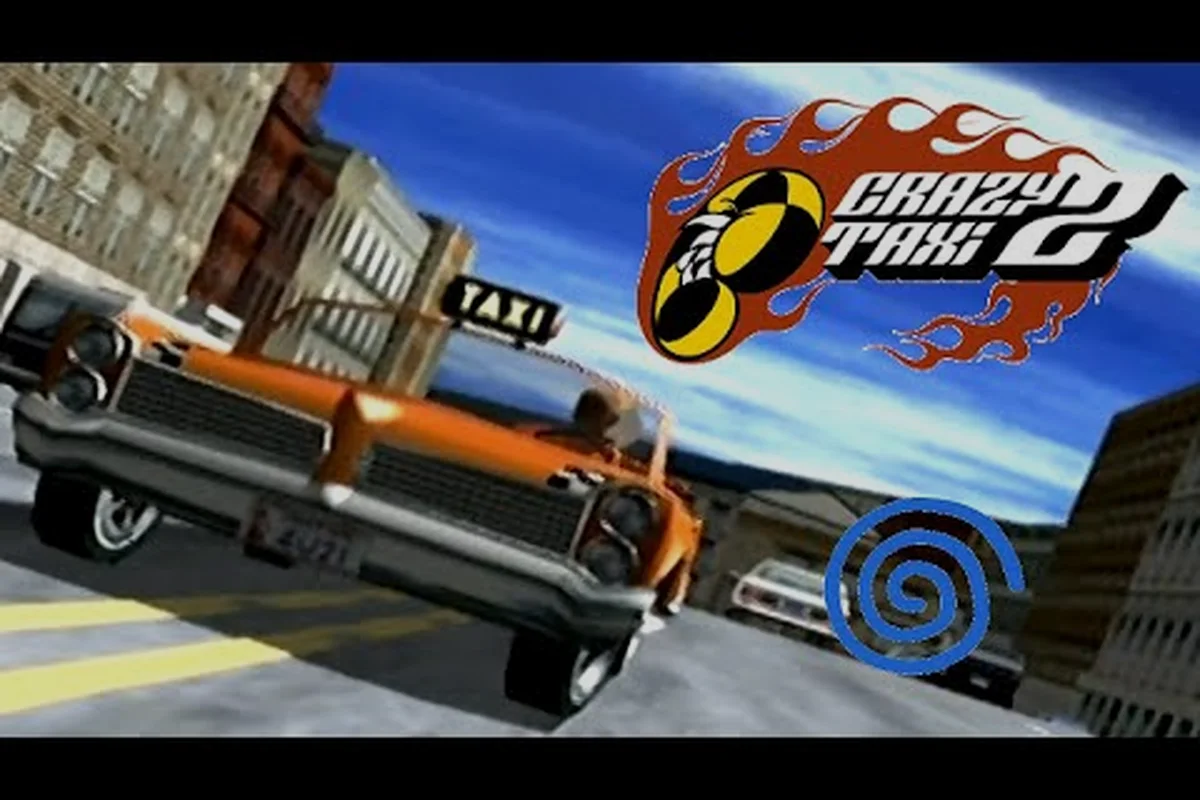
Revisiting the Crazy Taxi Dreamcast lineup is the fastest way to understand why the 2027 reboot feels so familiar, because every modern mechanic in the series traces back to that 2000 console port. If you want context for Crazy Taxi: World Tour's drift chains, Crazy Dash windows, and five-city world map, the Dreamcast-era games are the source code the developers are still quoting today. This guide walks through the original arcade-to-console port, Crazy Taxi 2, Crazy Taxi 3: High Roller, the GBA spin-off Catch a Ride, the PSP entry Fare Wars, and the mobile experiments like Crazy Taxi City Rush and Crazy Taxi Tycoon that kept the franchise alive between console generations.
The Original Crazy Taxi Dreamcast Port and Why It Still Matters
The first Crazy Taxi Dreamcast release arrived in 2000, roughly a year after the 1999 arcade debut, and it set the template every subsequent entry has copied. Players pick between four cabs (the default Cappuccino, Cabal, Bowling, and B.D. Joe's classic yellow) and chase fares across a West Coast-inspired city, with tips awarded for Crazy Dashes, drifts, near misses, and Crazy Hop jumps. The Dreamcast port added a dedicated home mode, a 30-minute Arcade mode, and the original Crazy Box mini-games that taught players how to chain stunts for maximum payouts.
| Original Port Feature | What It Did in 2000 | What It Becomes in 2027's Reboot |
|---|---|---|
| Four-cab starting roster | Locked roster, no swaps mid-shift | Expanded to six cabs with full Tune Up system |
| Arcade and Original modes | Two difficulty tiers, no progression | Story chapters, Free Roam, and Race the Clock |
| Crazy Box challenges | 16 mini-games for skill grinding | Re-imagined as Arcade Mode obstacle courses |
| Offspring + Bad Religion soundtrack | License-locked to the original disc | Modernized track list with select classics retained |
The Dreamcast port also shipped with one of the most expensive licensed soundtracks in early-2000s console gaming. The Offspring and Bad Religion tracks were a deliberate push by SEGA to anchor the arcade identity, and community sentiment still treats that soundtrack as a defining piece of the era. When the official Crazy Taxi: World Tour website describes the 2027 reboot as a return to the classic formula, this 2000 port is the blueprint being referenced.
The 1999 Arcade Roots That Traveled to Dreamcast
The Dreamcast port is a direct conversion of the 1999 Naomi arcade board, which ran on Sega's arcade hardware of the same era. That shared lineage is why Crazy Taxi 2, Crazy Taxi 3, and the later ports all feel mechanically connected even after the developers experimented with new cities, new drivers, and new mini-games. The arcade's one-button boost, directional drift, and brake-to-hop controls are still the bones underneath World Tour's updated handling.
Players who only know the modern smartphone entries often underestimate how demanding the Dreamcast port was on a controller without analog triggers. The Dreamcast pad's single analog stick and digital triggers forced a very specific drift timing window that the developers later expanded when they moved to PlayStation 2 and Xbox hardware. If you are practicing Crazy Dash in World Tour, the muscle memory you need is the same one Dreamcast veterans built on that single-stick layout twenty-five years ago.
Crazy Taxi 2 and the Santa Monica/Springfield Split
Crazy Taxi 2 dropped in 2001, also on Dreamcast, and it was the first major reinvention of the formula. Instead of a single West Coast city, the sequel offered two maps — a Santa Monica-inspired beach board and a Springfield-style downtown sprawl — that the player unlocked by progressing through the campaign. The Crazy Hop jump was also buffed, and party fares (multiple passengers with different drop-off points) became a scoring staple.
| Crazy Taxi vs Crazy Taxi 2 | Original Dreamcast Port | Crazy Taxi 2 |
|---|---|---|
| Cities | One West Coast map | Two maps: beach + downtown |
| Drivers | Four cabs, fixed | Same four cabs plus Gus and Gena as unlockables |
| Crazy Hop | Basic ramp jump | Longer hangtime, better air control |
| Party Fares | Absent | Multiple pickups, multiplied tip bonuses |
| Tip Scoring | Single fare only | Combo scoring with party pickups |
The Crazy Taxi 2 driver expansion is the reason Gus and Gena are still fan-favorite cabs in the modern reboot. Both characters were introduced as the "off-road" specialists of the roster, with better handling on rougher terrain. World Tour's six-cab garage includes a similar handling-first slot, and community testing suggests the equivalent slot will be filled by one of the original four plus a new cab rather than a direct Gus clone.
Crazy Taxi 2 Mini-Game Additions
Crazy Taxi 2 also introduced the Crazy Pyramid mode, a competitive mini-game where two players raced to stack passengers in a pyramid formation on top of the cab. The mini-game was exclusive to the Dreamcast version and was never ported to the PS2 release that followed a year later. The Crazy Pyramid's scoring system — balance points plus a tip bonus for every successful drop-off — is structurally similar to the modern stunts ranking system, where completion speed and style multiplier stack on top of base fare.
Crazy Taxi 2's two-map design also set a precedent that the series has followed ever since. When Crazy Taxi 3: High Roller shipped with a glitzy Las Vegas-style map and a near-endless Crazy X mode, the "more than one city" structure was no longer experimental — it was the new default. If you want to understand why World Tour is launching with five confirmed cities, Crazy Taxi 2 is the inflection point where single-city design died.
Crazy Taxi 3: High Roller and the PS2/Xbox Era
Crazy Taxi 3: High Roller landed in 2003, skipping Dreamcast entirely and launching on Xbox and PlayStation 2. The change of platform came because SEGA was exiting hardware production, and the developer Hitmaker transitioned the series to the new generation of consoles. The PS2 and Xbox versions featured an expanded soundtrack (more licensed tracks, plus the original arcade tunes remastered), a new Las Vegas-inspired Westside map, and a fully voiced Crazy X mode that blended missions with free-roam pickups.
| High Roller Feature | What It Added | Modern Echo in 2027 |
|---|---|---|
| Westside map (Las Vegas-style) | Glittery strip, casinos, wide boulevards | The "fame and chaos" hook of the World Tour story |
| Crazy X mission mode | Story-driven pickups with boss characters | The Axel Quest story chapters |
| Expanded driver banter | Fully voiced cutscenes | Returning character voice lines and cameos |
| Bonus arcade cabinets | Built-in classic Crazy Taxi on Xbox version | Retro references in World Tour's unlockables |
The Xbox-exclusive classic port is the most overlooked piece of Crazy Taxi 3 history. Microsoft negotiated a deal that let the original 1999 arcade game ship as a hidden bonus on the Xbox disc, accessible through a secret code. It was the first time a console port of Crazy Taxi ran at 60fps outside of the arcade, and it gave Xbox owners a side-by-side comparison of the original and the High Roller update. When World Tour launches in 2027, the same kind of legacy callback is expected via unlockable cosmetics and a classic mode that ports the original map.
The High Roller Soundtrack Expansion
The High Roller soundtrack added new licensed bands to complement the original Offspring and Bad Religion staples, and it was the first time the Kenji Kanno original score was officially re-recorded for a Western release. The dual-track approach (licensed rock plus orchestral score) is what later entries, including World Tour, are trying to recreate. According to community data from the September 2026 network test signups, music nostalgia is one of the top three reasons Dreamcast-era fans are wishlisting the new game.
The Xbox version also added achievements long before Xbox Live made them a standard feature, and the PS2 version's "Crazy X" mode was structurally a prototype for what World Tour calls Race the Clock. The throughline is direct: pick up fares, chain stunts, beat the timer, and the higher your score the more rewards you earn. If you want to practice that loop before 2027, the PS2 High Roller version is the closest single-player analog.
Crazy Taxi Catch a Ride on GBA and the Handheld Spin-Offs
In 2003, the same year as High Roller, Crazy Taxi: Catch a Ride shipped on Game Boy Advance as a top-down, single-screen take on the formula. It ditched the open city for grid-based maps, but it kept the scoring loop — chain stunts, hit drop-off rings, bank the tip. The GBA port was the first time Crazy Taxi ran on hardware weaker than a Dreamcast, and the design team's response was to simplify the steering into 4-directional movement with a dedicated boost button.
| GBA Catch a Ride Mechanic | Dreamcast Equivalent | 2027 Modern Spin |
|---|---|---|
| 4-directional steering | Analog stick drift | Touchscreen drift assist on Switch 2 |
| Single-screen maps | Open-city free roam | Optional 2D "Classic" mode planned |
| Pickup-and-deliver loop | Same | Story chapter structure |
| Boost as a limited resource | Always-on Crazy Dash | Crazy Dash with a meter |
The GBA game was also the first time the Cappuccino cab was given a top-down, almost cartoonish re-skin for the smaller screen, and it established the visual language that later Crazy Taxi City Rush and Crazy Taxi Tycoon mobile games would inherit. If you are planning to play the Switch 2 version of World Tour in handheld mode, the GBA Catch a Ride port is the design ancestor — top-down readability first, depth second.
Why Catch a Ride Still Feels Modern
Catch a Ride ran on a 240x160 screen with no analog input, yet the pickup-and-deliver loop still felt frantic because the timer was tight and the drop-off rings rewarded high-skill drift entries. The GBA port was also one of the first games to gate progression behind a license rank system, where players earned letters (D, C, B, A, S) based on average tip totals. That rank system is the direct ancestor of World Tour's Driver License ladder, which uses the same letter-tier structure for ranked online play.
You can see the GBA DNA in how World Tour's Crazy Box style challenges are designed: short, tight, score-attack bursts that test a single skill in isolation. If you bounced off the original series after the PS2 era, Catch a Ride is worth a quick emulator session to see how minimal the formula can get before it stops feeling like Crazy Taxi.
Crazy Taxi Fare Wars on PSP and the Portable Return
Crazy Taxi Fare Wars shipped in 2007 on PlayStation Portable as a compilation package that bundled the original Crazy Taxi 1 and 2 with PSP-optimized touch controls, ad-hoc multiplayer, and a remixed soundtrack. It was the first time a Crazy Taxi game ran on a true portable with analog input, and the widescreen PSP display gave the original West Coast and Santa Monica maps a fresh coat of presentation polish.
| Fare Wars Feature | What It Brought to the Series |
|---|---|
| Dual-map compilation | Both original cities on one UMD |
| Ad-hoc wireless multiplayer | First portable Crazy Taxi with PvP |
| Touch-screen drift option | Optional gyro-style input for newcomers |
| Remixed soundtrack | New mixes plus the original licensed tracks |
Fare Wars was also the last major single-player Crazy Taxi release before the long development gap that ended with World Tour. The PSP port's ad-hoc multiplayer — small lobbies, no cross-region matchmaking, no ranked ladder — is the structural ancestor of World Tour's Pickup Race and Cops 'N' Cabbies modes. According to the Crazy Taxi: World Tour Steam page, those two modes are the headline online offerings, and they are explicitly designed to recapture the couch-coop feel that Fare Wars pioneered on PSP.
Fare Wars Multiplayer Legacy
The ad-hoc multiplayer in Fare Wars was capped at four players per lobby and ran on PSP's local wireless protocol, which meant the host's battery life and signal strength determined everyone's experience. World Tour's up to six-player online races are the modern version of that same design — small lobbies, party pickups, and a focus on short, replayable matches rather than marathon ranked sessions. If you have fond memories of bumping cabs in Fare Wars on the school bus, the Crazy Taxi: World Tour for beginners guide breaks down how the 2027 matchmaking compares to the PSP ad-hoc days.
Fare Wars was also where the developers experimented with touch-screen drift inputs, a forward-looking idea that didn't quite work on PSP hardware but planted the seed for the Switch 2 gyro drift assist in World Tour. The mechanical progression is clear: Dreamcast analog stick → PS2 dual analog → PSP touch screen → Switch 2 gyro. Each generation kept the Crazy Dash timing window, even when the input method changed.
Crazy Taxi City Rush and the Mobile Free-to-Play Era
After Fare Wars, the franchise went quiet on console for over a decade. The 2014 mobile release Crazy Taxi City Rush revived the series as a free-to-play arcade racer on iOS and Android, and it was the first Crazy Taxi game designed from the ground up for touch controls. City Rush featured a single open city, swipe-to-drift steering, and a mission structure borrowed from mid-2010s mobile racers like CSR Racing and Asphalt.
| City Rush Mechanic | Console Precedent | 2027 Reimagining |
|---|---|---|
| Swipe-to-drift steering | Single-stick Dreamcast drift | Touch and gyro assist on Switch 2 |
| Mission-based progression | Crazy X from High Roller | Story chapter + Arcade Mode |
| Free-to-play economy | N/A (no prior F2P entries) | Premium-only World Tour, no microtransactions |
| Single-city design | Dreamcast single map | Five-city world tour with cross-map travel |
City Rush was the first Crazy Taxi game without a classic drop-off ring system, which was a major design break from the series. The mobile version replaced drop-off rings with floating target markers, and the community pushback was strong enough that the 2017 update re-added traditional drop-off rings as an optional mode. That 2017 update is the closest direct ancestor of World Tour's "classic drop-off ring drift entry" mechanic, and it is worth playing for an hour if you want to feel the timing window on a touchscreen before 2027.
Crazy Taxi Tycoon and the Idle Spinoff
The 2017 mobile spin-off Crazy Taxi Tycoon leaned even harder into the free-to-play mobile market by turning the franchise into an idle management game. Players ran a taxi empire, hired drivers, and unlocked new cabs over time, with the actual driving limited to short burst sessions. Tycoon was a commercial disappointment, but it was the last time the six-cab roster appeared in a single game before World Tour officially confirmed the same lineup.
The Tycoon roster — Cappuccino, Cabal, Bowling, B.D. Joe, Gus, and Gena — is the same six-cab garage that the Crazy Taxi: World Tour cars and customization breakdown maps to the modern Tune Up system. If you want to see the un-customized stock versions of the six cabs before the 2027 launch, Tycoon's character select screen is the cleanest reference, and it confirms that the full original roster is back in active rotation.
How the Dreamcast Lineage Connects to Crazy Taxi: World Tour
The Dreamcast-era games are not just nostalgia fuel; they are the mechanical foundation for every system in the 2027 reboot. The Crazy Dash boost-and-brake loop traces directly to the original 1999 arcade, the party fare scoring is a Crazy Taxi 2 evolution, the ranked license ladder started in Catch a Ride, the multiplayer design comes from Fare Wars, and the modernized open-world approach pulls from City Rush's mission structure. When the Crazy Taxi: World Tour maps guide describes the West Coast starter city, the layout is structurally the same city from the original Dreamcast port, expanded with modern hardware fidelity and new districts.
| Dreamcast-Era Mechanic | First Appeared In | World Tour Implementation |
|---|---|---|
| Crazy Dash boost loop | 1999 arcade / 2000 Dreamcast | Core scoring mechanic, expanded with chain windows |
| Party fare pickups | Crazy Taxi 2 (2001) | Multi-passenger scoring, tip multiplier |
| License rank system | Catch a Ride (2003) | Driver License ladder, ranked online play |
| Ad-hoc multiplayer | Fare Wars (2007) | Pickup Race + Cops 'N' Cabbies, six-player online |
| Drop-off ring drift entry | Original port | Modernized with visual ring and combo bonus |
| Six-cab roster | Crazy Taxi Tycoon (2017) | Confirmed launch roster, full Tune Up supported |
The pattern across twenty-five years of releases is consistent: each entry adds one or two new mechanics, keeps the rest of the loop intact, and trusts the player to find the fun in the gap between a pickup and a drop-off. The 2027 reboot is following the same playbook, which is why the official Steam listing describes it as a return to form rather than a reinvention. If you have a Dreamcast controller and a copy of the original port, you can already feel the muscle memory that World Tour is designed to reward.
What Dreamcast Veterans Should Watch in the Network Test
The September 2026 closed network test was the first public-facing moment for the 2027 reboot, and the test build leaned heavily on the original Dreamcast port for its handling feel. The drift timing window, the Crazy Dash speed gate, and the drop-off ring entry were all tuned to match what Dreamcast players remember from 2000, with small modern assists to compensate for the higher frame rate and updated physics engine. If you are wondering whether the new game will feel "right" to a Dreamcast veteran, the Crazy Taxi: World Tour city maps and landmarks guide is a good companion read for planning which cities to test first when the open beta drops.
The test also confirmed that the classic drop-off ring drift entry is back, the party fare scoring from Crazy Taxi 2 is back, and the license rank letters from Catch a Ride are back. None of those are new inventions — they are all direct ports of mechanics that have lived in the series since 1999. The 2027 reboot's job is not to invent the loop, but to polish it for a generation that grew up on mobile games and expects modern UX polish.
Frequently Asked Questions
Is the original Crazy Taxi Dreamcast port still playable today?
Yes, on original Dreamcast hardware or via licensed re-releases on modern platforms. The 2000 port is the most widely preserved version of the original game, and the soundtrack licensing has been re-confirmed for re-release multiple times. The original 1999 arcade board is also emulated in several community projects, though you should seek out legal copies.
How does Crazy Taxi 2 differ from the original Dreamcast port?
Crazy Taxi 2 adds two new cities (a beach board and a downtown area), introduces Gus and Gena as unlockable drivers, expands the Crazy Hop jump, and adds party fares for multiplied scoring. The Dreamcast version is a single-city game with four cabs and no party fares, while the sequel is a clear expansion of every system.
What is Crazy Taxi 3: High Roller and is it worth playing today?
High Roller is the 2003 PS2 and Xbox sequel that adds a Las Vegas-style Westside map, a fully voiced Crazy X mission mode, and an expanded soundtrack. It is worth playing today as the closest console-era analog to the modern World Tour story campaign, and the Xbox version includes a hidden port of the original arcade game as a bonus.
Are the mobile Crazy Taxi games connected to the Dreamcast series?
Mechanically, yes — Crazy Taxi City Rush keeps the pickup-and-deliver loop with touch-based drift and near-miss scoring, while Crazy Taxi Tycoon confirmed the six-cab roster now carrying into Crazy Taxi: World Tour's launch. Both simplified the Dreamcast formula for shorter sessions, but neither replaced the original drop-off ring mechanics. World Tour is the proper callback players have been requesting.
Will Crazy Taxi: World Tour include the classic Dreamcast soundtrack?
Yes — the 2027 reboot blends classic Offspring and Bad Religion licensed tracks from the 1999 arcade and 2000 Dreamcast port with a modernized original score, and September 2026 network test signups confirm legacy music callbacks as a confirmed post-launch draw for longtime fans.